Posts

Why Does A Woman Have To Be "Remarkable" To Be Remembered?: Some Issues With Teaching Women's History

Have you ever noticed that women's history is dominated by the same kinds of women? It's always the top 100 important women in history or  the "remarkable" story of this historical heroine. If she wasn't "brave," or "remarkable," or "influential," she rarely (if ever) gets a mention. This is a major bugbear of mine. Why does a woman have to conform to one of these labels to have a voice? Is her story not worth mentioning if she wasn't hugely influential, in some way or another? And another question: who defines these labels, anyway, and what does it actually mean to be "brave" or "remarkable?" Let me make something very clear from the start, though. I am not criticising the fact that we have so many books, articles, videos, TV shows dedicated to women from the past. Neither am I suggesting that we should stop celebrating women's achievements or significance. I just feel that we are always celebrating...

A Hiatus From Writing

After a long break and a career change, I have come back to writing. Looking over old ideas, old research and old posts has sparked something of a philosophical conversation in my mind. Namely, why do I do what I do? Why do I care about the topics I write about and, more importantly, why would anybody else? Generally speaking, when I have talked to people about the kinds of historical research that I have been involved in and about the topics I write about, particularly my more recent work, they react with a sort of macabre interest. It tends to come under the umbrella of the true-crime genre. It's Jack the Ripper, it's Victorian London, it's something shadowy and gruesome. Understandably, true crime has a huge following in the UK and while I do enjoy it, I have never viewed any of my own work in that light. I have always been clear in my mind that my work is history work. At this point, I feel I need to make it clear that I do not view true-crime writing as something...

Sympathising With A Female Bigamist: The Case of Eva Pierlo

I came across the story of Eva Pierlo while researching Christiana Edmunds' time in Newgate prison. The pair were cellmates and Christiana complained to the prison governor about sharing with Eva, a woman accused of bigamy, on the grounds that she had a low moral character. This is rather ironic when you consider that Christiana was accused and found guilty) of one count of murder and three counts of attempted murder! Anyway, while the details of Eva's case are scant, I think her story is one worth mentioning. Very little is known about Eva's background until she stood in the dock of the Old Bailey on 9 January 1872. The Times commented on Eva's "ladylike appearance and manners." Eva had no counsel but this was a good thing, wrote one reporter from the Leeds Times: "This compelled her to state her case to the court in her own way and, judging by the result, her oratorical powers must be of no mean description." Reading her trial transcript...

C is for Chimney Sweep: Victorian England's Most Dangerous Jobs

C is for Chimney Sweep The chimney sweep was an indispensable figure in Victorian society.   Dubbed the great "fire-defender," the chimney sweep's day began as early as 3 a.m. He swept out the nation's chimneys, making sure that the Victorian home was a warm, comfortable and safe place to be. Despite the continued and widespread need for their services, however, chimney sweeping was not a well-paid occupation. In 1867, for example, the typical sweep earned between 21 and 23 shillings per week, a figure comparable to postmen, tailors and miners. In this same year, England had around 4300 chimney sweeps, serving a population of almost 20 million people. To work in this profession, a chimney sweep was first apprenticed to an older, more experienced man, called a master sweep. This process generally began in childhood, with many apprentices still in single figures when they entered the workforce. It was only in 1834, just three years before Queen Victoria's ac...

B is for Bar Worker: Victorian England's Most Dangerous Jobs

B is for Bar Worker In Victorian England, the pub was more than just a place to buy a drink. It was the social heart of its community; a place for business and leisure that came to life every evening. As such, we might idealise those who worked behind the bar but, in reality, those employed in this industry were at risk from a number of serious ailments. After conducting a number of interviews and visits, the report of the Dangerous Trades Committee painted a rather bleak view of the health of publicans and barmen: Without any exercise in the open air, his long day is too often spent in an atmosphere reeking with the odour of spirits and tobacco smoke, and emanations from the men and women who lounge at the bar; and this, coupled with the numerous temptations to drink, and his irregular meals, sooner or later, induces structural alterations in the liver, lungs and heart, that life to a premature close. [i] The “temptation to drink” was especially problematic. The Committe...

A is for Acrobat: Victorian England's Most Dangerous Jobs

A is for Acrobat The circus was hugely popular in the 19th century. In fact, it was so popular that alongside the traditional circus, circus acts often performed in theatres and music halls to warm up the crowd before the main show began. In part, it was the arrival of the railway which enabled the circus to thrive. For the first time, travelling circuses toured towns and cities, reaching the very farthest corners of the country. Unsurprisingly, audiences flocked to see these exciting shows in their thousands. Generally, the most popular performers were the equestrian trick riders but all types of acrobats, including trapeze artists and tightrope walkers, drew large crowds in their own right. From the historian's perspective, acrobats are an interesting group to study since women formed so many of their number and society viewed these women in overtly sexual terms. Their costumes, for example, were a particular source of concern for the Victorian spectator, as shown by th...

Victorian England's Most Dangerous Jobs

Image
After writing the story of Christiana Edmunds, I signed a contract with my publisher to write a book about the most dangerous jobs in Victorian England. The idea for this book came from the story of England's "mad hatters." I had always believed that the mad hatter from Alice in Wonderland was the product of fiction but actually, Lewis Carroll drew his inspiration from real life. Victorian hatters were well-known for their eccentric behaviour and having the shakes.  Of course, we now know that hatters went "mad" because they routinely came into contact with mercury while manufacturing felt hats, but the Victorians believed their madness to be the product of drunkenness and vice. So the idea of the mat hatter was a well-established stereotype long before Caroll ever ventured into Wonderland. The hatters weren't the only Victorian workers to come into close contact with dangerous substances on a daily basis, nor were they the only occupational group to be...

Face-Reading and Christiana Edmunds: The Wonderful World of Victorian Physiognomy

Image
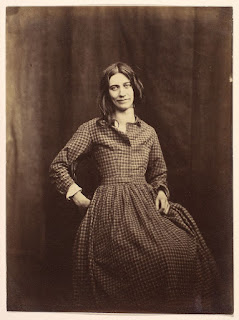
When Christiana Edmunds stood trial for her poisoning spree in January 1872, her physical appearance was heavily scrutinised by the press. This was not uncommon among murderesses, as I'll discuss in a later post, but it was, in part, a response to the rise of a pseudo-science called Physiognomy. As a rough definition, Physiognomy is the belief that studying a person's facial features or expressions can be indicative of their personality or behaviour. Though it's centuries old, the Victorians had a particular love for Physiognomy and believed that it had a myriad of uses. It was used, for example, to depict the so-called differences between racial groups, like the Jews and the Irish. It was also used by Hugh Welch Diamond, the Superintendent at the Surrey County Asylum (1848-1858), as a means of both illustrating insanities (in its various forms) and as a method of treatment. Diamond believed that if a patient saw a photo of herself, she might recognise her madness and beg...

Christiana Edmunds: The Venus of Broadmoor (Part Two)

In the first part of this article , I looked at how the infamous institution, Broadmoor, came into being and the sort of asylum that it was when Christiana arrived there in July 1872. (If you missed it, you can read it here ). In this post, I'm looking at life for Christiana once she was admitted and as under the care of Dr William Orange, Broadmoor's resident superintendent. All of our knowledge of Christiana's time in Broadmoor comes from her medical file, a document filled out by Dr Orange and based entirely on his observations. As you can imagine, her file makes for interesting reading, not just because of its contents but because it is one of the few impressions of Christiana that remains in existence. According to Dr Orange, Christiana confirmed her diagnosis of insanity in the first few weeks of her arrival at Broadmoor. Though she was a "quiet and orderly" in her behaviour, she showed no remorse for the crimes that she had committed nor did she offer a...

Christiana Edmunds: The Venus of Broadmoor (Part One)

Image
On this day - 5 July - in 1872, Christiana Edmunds was transferred from the Sussex Country Prison to Broadmoor Criminal Lunatic Asylum in Berkshire. Built in 1863, Broadmoor was England's answer to the long-standing question of where to house the criminally insane. Previously, the provision for such people was haphazard and generally inadequate, with many criminal lunatics housed in ordinary asylums or prisons. By 1860, it was felt that such provision was undesirable, as stated by a Select Committee of the House of Commons: To mix such persons, that is criminal lunatics, with other patients is a serious evil;  it is detrimental to the other patients as well as to themselves. In the same year, the government passed the Criminal Lunatic Asylum Act which authorised the creation of Broadmoor and gave the Home Secretary control over its management and the admission of patients. Construction began shortly after and, three years later, on 23 May 1863, Broadmoor welcomed its first ...

How to Write A History Book (and Keep Your Sanity) - My Top Ten Tips

I am very pleased to be at th e  final stage of completing my book on Christiana Edmunds. It has taken around 2 years to get  here and it has been emoti onal, to say the least!   B ut ,  now that I'm finally here (hooray!), I thought I'd share a few tips  on getting your book done, without having a complete and total mental breakdown.      If you feel overwhelmed by the prospect of writing 60, 000 words, break it down into chapters. For Christiana, I set every chapter a minimum word count of 4000 words and worked on them one at a time. That way, writing the book felt like writing lots of essays, not like one mammoth piece of work.    Keep a written record of every source you consult – whether you use them in your book or not. It helps to arrange them by theme, too. You will want to murder someone if,  ever  time you need to check a fact or date, you have to go rifling through your web histo...

Writing About Criminal Women: Some Thoughts

I recently read a fabulous article by Nell Darby about the dangers of glorifying history's criminals (check it out   here ) and it really got me thinking about my book on Christiana Edmunds. By writing about her, am I glorifying her crimes? Am I trivialising the horrible things she did? It's an important and often over-looked question, I think.     When I was first approached to write this book, it was clear that the publishers were looking for something sensational. They wanted a book that would capture the public's imagination, so I duly set about scouring the newspapers of the 19th century in search of shocking, though less well-known, crimes. I think I succeeded in my aim but, in writing a book that is deliberately sensational, I can't help but wonder if I am guilty of feeding the public's obsession with the "celebrity" criminal. But, even if I am, is that such a bad thing?    Before I answer that, let's get something clear from the beginn...

Interview With the History Magpie

Image
This week, I was interviewed by the lovely Rachel, aka the History Magpie about my new book, the Case of the Chocolate Cream Killer. Here's the full text: Hello Kaye, thanks so much for stopping by. How did you find out about Christiana Edmunds and what made you want to write about her? I found about her by accident, really. I was reading a newspaper article about another case when I saw the headline ‘The Brighton Lady Poisoner’ on the same page. Intrigued, I read the excerpt from her trial and immediately wanted to know more. I was already in talks with Pen and Sword about a book commission so I pitched her story and, fortunately for me, they were equally fascinated with the case. In a recent blog post you mention that Christiana was born in Margate and grew up in Canterbury – can you tell us about her family life? Yes, Christiana was born in Margate in 1828. She was the oldest child of William Edmunds, a locally-renowned and very successful architect, who designed St Joh...